
Be honest—have you ever been told to “sit straight” or “stand properly”?
Most of us know posture matters, yet neck pain, back stiffness, and shoulder tightness have become almost normal parts of daily life.
The surprising truth is this: your posture is not ruined by one bad day, but by small habits you repeat every single day without realizing it. Let’s break down five everyday habits that are quietly damaging your posture—and what you can do to fix them.
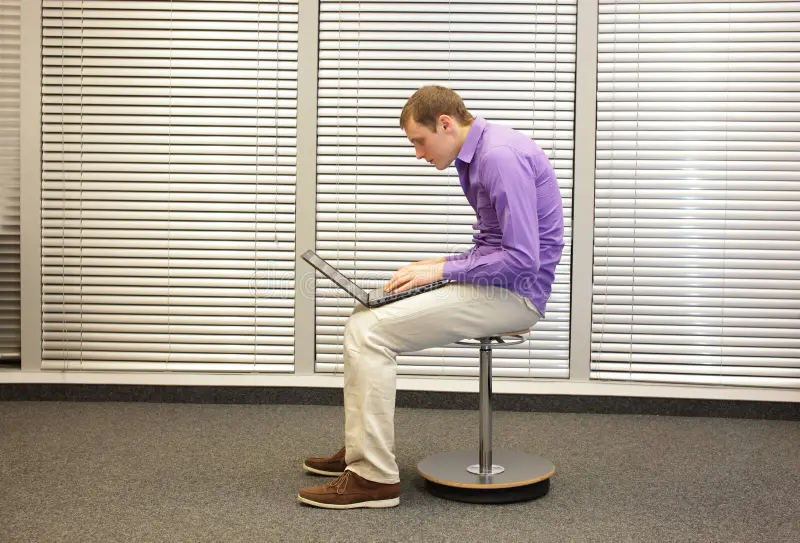
1. Sitting for Hours Like Your Body Is a Chair Accessory
Office work, scrolling, meetings, driving—our lives revolve around sitting. The problem isn’t sitting itself; it’s sitting for too long without moving.
When you sit continuously, your back muscles switch off, your hips tighten, and your shoulders start rounding forward. Slowly, your body adapts to this slouched position, making it feel “normal.” This is why standing straight suddenly feels uncomfortable.
Over time, prolonged sitting can lead to lower back pain, neck stiffness, and that constant feeling of heaviness in your shoulders.
Simple fix:
Stand up every 30–40 minutes. Walk for a minute, stretch your arms, or gently arch your back. Movement is posture’s best friend.

2. Looking Down at Your Phone All Day (Hello, Tech Neck!)
Your phone might be small, but the damage it causes isn’t.
Every time you bend your neck to look at your phone, your head moves forward. The more it tilts, the heavier it becomes for your neck muscles to support. Do this repeatedly, and your neck, shoulders, and upper back pay the price.
This habit is one of the biggest reasons people now complain of neck pain, headaches, and tight shoulders—even in their 20s.
Simple fix:
Lift your phone to eye level instead of bending your neck down. Also, take short screen breaks and gently move your neck in all directions.

3. Slouching Without Even Realizing It
Most people don’t choose to slouch—it just happens.
You start the day sitting upright, but as you get tired or stressed, your shoulders drop, your chest collapses, and your head moves forward. Standing posture isn’t much better—leaning on one leg, locking the knees, or arching the lower back are extremely common.
These small postural mistakes create muscle imbalance. Some muscles become tight, others weak, and your spine slowly loses its natural alignment.
Simple fix:
Do quick posture check-ins during the day. Relax your shoulders, lift your chest slightly, and imagine a string pulling you gently upward from your head.
4. Working from Bed or the Sofa
It feels comfortable, cozy and productive… for about 10 minutes.
Working from your bed or sofa forces your spine into awkward positions—rounded back, neck bent forward, shoulders hunched. Your body has no proper support, so muscles stay tense for hours trying to “hold you up.”
Do this often, and your body starts accepting this poor alignment as normal, leading to neck pain, upper-back stiffness, and even lower-back issues.
What helps:
If you’re working, sit at a proper desk setup. If you must use the bed or sofa, keep it short and change positions frequently.

5. Sleeping in Awkward Positions Night After Night
Posture doesn’t end when the day ends.
Spending 6–8 hours sleeping in poor positions—on very soft mattresses, with too many pillows, or in twisted postures—can strain your neck and spine. That’s why many people wake up with stiffness or pain even before the day begins.
If your spine isn’t supported at night, your muscles don’t recover properly.
Simple fix:
Use a pillow that keeps your neck neutral and a mattress that supports your spine’s natural curves. Good sleep posture sets the tone for your day.

The problem isn’t that you do these things once in a while.
The problem is that you do them every day.
Posture changes slowly. Pain appears slowly. And that’s why people ignore the warning signs until discomfort becomes constant.
The good news? These habits can be corrected. With awareness, small changes, and the right exercises, your posture can improve significantly.
If you notice recurring neck pain, back pain, or stiffness, a physiotherapist can help identify these everyday habits and guide you toward better posture and long-term relief.
Because posture isn’t about sitting like a statue—it’s about how you use your body in real life, every single day.
-Dr. Tanmayee Pore (PT)
