
Physiotherapy is now one of the most trusted treatment options for people dealing with pain, injuries, mobility problems and long-term health conditions. However, with so many available treatment methods—manual therapy, dry needling, exercise therapy, taping, soft tissue release, and electrical modalities—it can be confusing to know what truly works.
This is where Evidence-Based Practice (EBP) becomes essential.
What Is Evidence-Based Physiotherapy
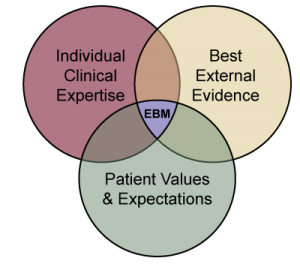
Evidence-based physiotherapy means making treatment decisions using three key components:
- The best available scientific research
- The clinical experience of the physiotherapist
- The needs, values and goals of the patient
When these three parts come together, the result is a treatment plan that is scientifically proven, personalised and truly effective.
Why Evidence-Based Practice Matters
Many people choose treatments because they are popular or trending on social media. But not every therapy is backed by strong research.
Evidence-based physiotherapy ensures that:
- The treatment is safe
- The treatment has been tested on many patients
- The treatment gives long-term benefits
- Patients do not waste time or money on unproven options
Therefore, EBP protects patients from trial-and-error therapy and focuses on what actually works.
How Physiotherapists Apply Evidence-Based Practice
A physiotherapist begins with a detailed assessment and identifies the root cause of the problem. Then, instead of using one fixed protocol, they select the best treatment by combining research, skills and patient goals.
For example:
- If a patient has knee osteoarthritis, scientific studies show that strengthening exercises, weight management and manual therapy give better results than only heat or ultrasound.
- For chronic back pain, evidence strongly supports core stability training, education, and lifestyle correction rather than only bed rest or painkillers.
As a result, treatment becomes more accurate, progressive and result-oriented.
Benefits of Evidence-Based Physiotherapy for Patients
Evidence-based practice not only improves recovery but also provides many advantages:
- Faster improvement in symptoms
- Reduced dependency on medicines
- Lower chances of re-injury
- More control and awareness about one’s own body
- A personalised rehabilitation plan instead of a “one-size-fits-all” approach
In other words, patients become active partners in their recovery, not just passive receivers of treatment.
Examples of Common Evidence-Backed Physiotherapy Approaches
| Condition | Evidence-supported treatment |
|---|---|
| Neck / back pain | Exercise therapy + Education + Posture correction |
| Knee osteoarthritis | Strengthening + Weight management + Manual therapy |
| Tennis elbow | Eccentric loading exercises + Taping + Activity modification |
| Shoulder impingement | Scapular strengthening + Stretching + Manual therapy |
| Vertigo (BPPV) | Canalith repositioning manoeuvres (CRM) |
| Post-surgery rehab | Progressive exercise therapy + Mobility training |
These treatments are successful because their effectiveness has been proven repeatedly in scientific research.
Myths About Evidence-Based Physiotherapy
Although EBP is widely accepted, some myths are still common:
| Myth | Reality |
|---|---|
| Only machines give results | Exercise therapy and manual therapy have stronger research support |
| Evidence-based practice is slow | Recovery is usually faster and more long-lasting |
| It is the same protocol for everyone | EBP focuses on personalised treatment plans |
| Only gym-based exercises count as evidence-based | Education, lifestyle changes and pain-science therapy are equally supported |
Therefore, evidence-based physiotherapy is not just about exercises — it is about using what works best for each individual.
How Patients Can Identify an Evidence-Based Physiotherapy Clinic
A clinic that follows EBP usually:
- Performs a proper assessment
- Explains the root cause of the problem
- Sets measurable goals
- Updates treatment based on progress
- Uses exercises and education along with manual therapy
- Tracks recovery through re-evaluation
If a patient receives passive treatment every session without any progress, it may not be evidence-based.
Final Thoughts
Evidence-based physiotherapy is the gold standard of treatment. It avoids temporary fixes and focuses on long-lasting recovery, functional improvement and better quality of life. When science, physiotherapy skill and patient goals come together, healing becomes more effective and meaningful.
If you or someone you know is struggling with pain or mobility issues, choosing an evidence-based physiotherapy approach can make a world of difference.
-Dr. Ashish Nimonkar (PT)