
A Brachial Plexus Injury (BPI) is a serious nerve injury that affects the network of nerves responsible for controlling movement and sensation in the shoulder, arm, forearm, and hand. These nerves originate from the neck and travel through the shoulder to the upper limb. When these nerves are stretched, compressed, torn, or avulsed (pulled away from the spinal cord), it can significantly impact a person’s ability to perform everyday activities
Early diagnosis and specialized physiotherapy play a crucial role in maximizing recovery, restoring function, and improving quality of life after a brachial plexus injury
What Is the Brachial Plexus?
The brachial plexus is a complex network of nerves formed by the spinal nerve roots from C5 to T1. These nerves control:
- Shoulder movement
- Elbow bending and straightening
- Wrist and hand function
- Grip strength
- Sensation in the upper limb
Any damage to these nerves can result in weakness, numbness, pain, loss of movement, or complete paralysis of the affected arm.
What Causes Brachial Plexus Injury?
Brachial plexus injuries can occur due to various reasons, including:
1. Trauma and Accidents
– Road traffic accidents
– Motorcycle accidents
– Sports injuries
– Falls from height
– Workplace injuries
2. Birth-Related Injuries
Newborns may develop brachial plexus injuries during difficult deliveries, commonly known as Erb’s Palsy or – Obstetric Brachial Plexus Injury.
3. Compression or Tumors
– Nerve compression from swelling
– Tumors affecting the nerve pathway
– Radiation-induced nerve damage
4. Post-Surgical Complications
Common Symptoms of Brachial Plexus Injury
Symptoms vary depending on the severity and location of the nerve damage.
1. Mild Injury
- Tingling or numbness in the arm
- Temporary weakness
- Burning or electric shock-like sensation
2. Moderate to Severe Injury
- Significant arm weakness
- Loss of shoulder movement
- Difficulty lifting objects
- Reduced grip strength
- Muscle wasting
- Loss of sensation
3. Complete Brachial Plexus Injury
- Flaccid paralysis of the arm
- Severe functional limitations
- Chronic neuropathic pain
How Does Brachial Plexus Injury Affect Daily Life?
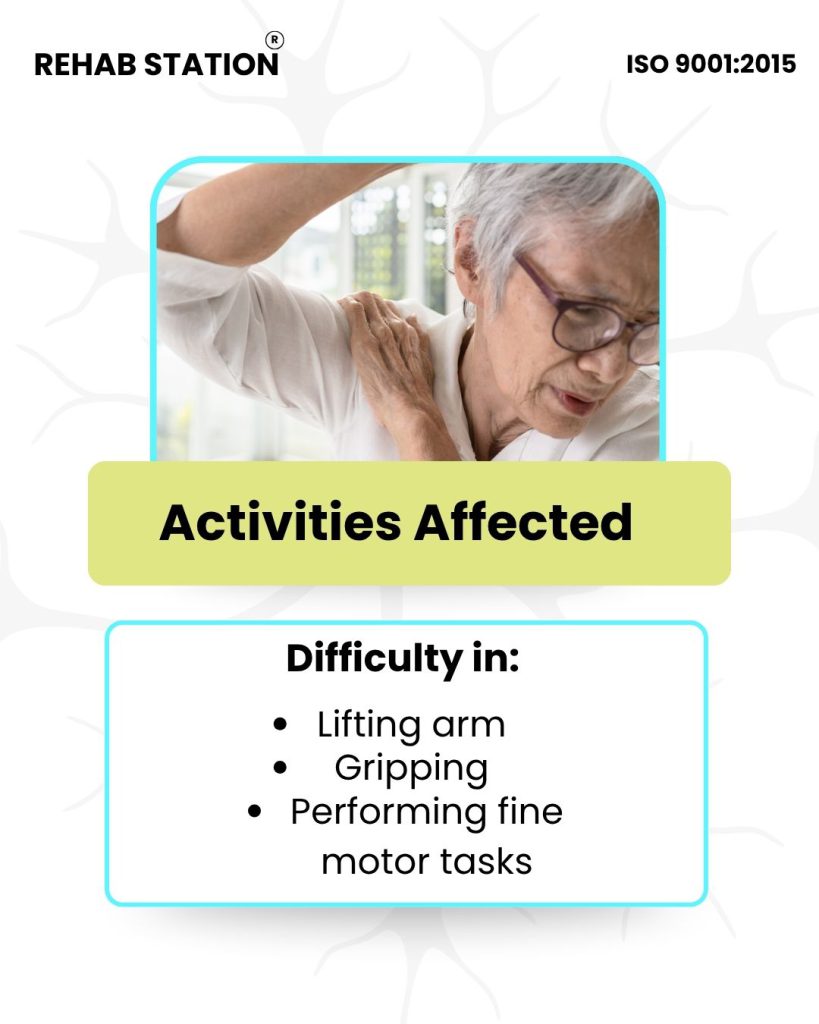
Individuals with brachial plexus injuries often struggle with routine activities such as:
- Dressing independently
- Writing and typing
- Carrying groceries
- Personal grooming
- Cooking and household work
- Driving
- Participating in sports and recreational activities
- These limitations can significantly impact independence, employment, and emotional well-being.
Diagnosis of Brachial Plexus Injury
A comprehensive evaluation typically includes:
- Clinical neurological examination
- Muscle strength testing
- Sensory assessment
- Electromyography (EMG)
- Nerve Conduction Studies (NCS)
- MRI or CT Myelography
- Functional assessment by a physiotherapist
Can Brachial Plexus Injuries Recover?
Recovery depends on several factors:
- Severity of nerve damage
- Age of the patient
- Time since injury
- Presence of surgical repair
- Consistency of rehabilitation
Some mild stretch injuries may recover spontaneously, while severe nerve ruptures often require surgical intervention followed by intensive physiotherapy rehabilitation.
How Physiotherapy Helps in Brachial Plexus Injury Recovery?
Physiotherapy is one of the most important components of brachial plexus injury rehabilitation. The primary goal is to restore function, prevent secondary complications, and maximize independence
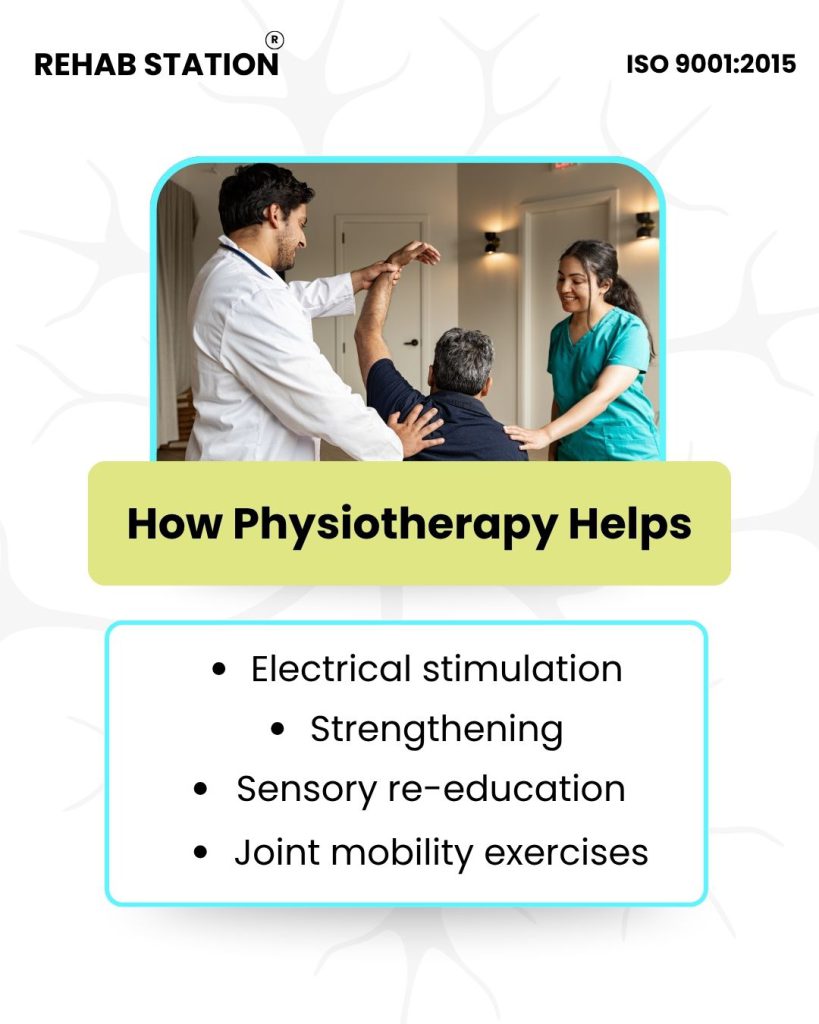
1. Maintaining Joint Mobility
Weak or paralyzed muscles can lead to joint stiffness and contractures.
Physiotherapists use:
- Passive range of motion exercises
- Joint mobilization techniques
- Stretching programs
These interventions help maintain flexibility and preserve movement.
2. Muscle Re-Education
As nerve recovery occurs, muscles need retraining.
Treatment may include:
- Assisted movements
- Active strengthening exercises
- Task-specific training
- Neuromuscular facilitation techniques
This helps patients regain voluntary muscle control.
3. Strength Training
Progressive strengthening programs focus on:
- Shoulder stabilizers
- Rotator cuff muscles
- Elbow flexors and extensors
- Wrist and hand muscles
Improved strength enhances arm function and daily activity performance.
4. Pain Management
Many patients experience severe neuropathic pain following brachial plexus injuries.
Physiotherapy may help through:
- TENS therapy
- Soft tissue techniques
- Desensitization exercises
- Therapeutic positioning
- Movement-based pain management strategies
5. Prevention of Muscle Atrophy
Long-term nerve injuries can cause significant muscle wasting.
Physiotherapists use:
- Electrical muscle stimulation
- Active-assisted exercises
- Functional movement training
to maintain muscle health while nerve regeneration occurs.
6. Sensory Re-Education
Loss of sensation can interfere with hand function and safety.
Sensory retraining programs help improve:
- Touch awareness
- Object recognition
- Protective sensation
- Fine motor coordination
7. Functional Rehabilitation
The ultimate goal of rehabilitation is to restore meaningful function.
Physiotherapy focuses on:
- Reaching activities
- Grasp and release training
- Hand function exercises
- Activities of daily living training
- Return-to-work rehabilitation
Physiotherapy After Brachial Plexus Surgery
Patients undergoing nerve grafting, nerve transfer, or tendon transfer surgeries require specialized post-operative rehabilitation.
Physiotherapy protocols are designed to:
- Protect surgical repairs
- Restore range of motion
- Facilitate nerve regeneration
- Retrain transferred muscles
- Improve functional outcomes
Why Choose Rehab Station for Specialized Physiotherapy after Brachial Plexus Injury?
Brachial plexus injuries require a highly individualized rehabilitation approach. A specialized physiotherapy program focuses on restoring movement, strength, sensation, coordination, and independence while addressing pain and psychological challenges associated with long-term recovery.
At our Rehab Station physiotherapy clinic, we provide comprehensive assessment and evidence-based rehabilitation programs tailored to each patient’s functional goals. Our aim is to help patients regain confidence, improve arm function, and return to their daily activities as safely and effectively as possible.