World Parkinson’s Day (11th April)
World Parkinson’s Day is observed on April 11 every year to raise awareness about Parkinson’s disease, support patients, and promote early diagnosis and better care. When we think of shaking hands or slow walking in older adults, we often ignore it as “age-related.” But sometimes, these can be early signs of Parkinson’s Disease—a condition where early physiotherapy can make a life-changing difference. The Physiotherapists at Rehab Station see many people diagnosed with Parkinson’s Disease and it’s associated problems like Rigidity, Balance Impairment, Repeated Falls, Coordination Issues and Loss of Interest in activities every day. Parkinson’s Disease is a progressive neurological condition that mainly affects movement. It happens due to a decrease in dopamine. It develops gradually, which means symptoms may be mild in the beginning and often go unnoticed.
Symptoms of Parkinson’s usually begin with either/or :
1. Tremors (Shaking) :
Typically begins in one hand or fingers
Occurs at rest (resting tremor)
2. Bradykinesia (Slowness of Movement) :
Movements become slower and harder to initiate
Daily tasks take more time
3. Muscle Rigidity :
Stiffness in arms, legs, or trunk
Can cause pain and reduced mobility
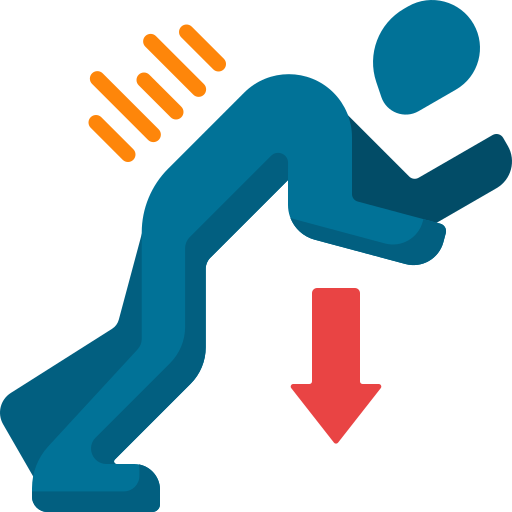
4. Postural Instability :
Poor balance and increased risk of falls
Stooped posture
5. Changes in Writing (Micrographia) :
Handwriting becomes smaller and cramped
6. Reduced Facial Expressions :
“Mask-like face” with less blinking or expression
7. Walking Difficulties :
- Shuffling gait
- Reduced arm swing
- Freezing episodes (sudden inability to move)
Parkinson’s also affects non-movement functions:
- Loss of smell
- Sleep disturbances
- Constipation
- Depression & anxiety
- Fatigue
- Soft or low voice
Physiotherapy plays a key role in managing Parkinson’s Disease and improving quality of life.
Benefits of Physiotherapy
1. Improves Mobility & Movement :
Helps reduce slowness (bradykinesia)
Encourages larger, more controlled movements
2. Reduces Muscle Stiffness :
Stretching and mobility exercises reduce rigidity
Improves flexibility
3. Enhances Balance & Prevents Falls :
Balance training reduces fall risk
Improves confidence in walking
4. Improves Gait (Walking Pattern) :
Training for better stride length and arm swing
Helps manage freezing episodes
5. Posture Correction :
Exercises to reduce stooped posture
Strengthens back and core muscles
6. Improves Functional Independence :
Makes daily activities easier (sitting, standing, turning)
7. Boosts Mental Health :
Exercise improves mood and reduces anxiety
Common Physiotherapy Techniques
- Gait training (walking practice with cues)
- Balance exercises
- Strength training
- Stretching exercises
- Cueing techniques (visual or auditory cues)
- HUBER 360 (Balance Training)
- LSVT BIG therapy (large amplitude movements)
- Dance and Movement Therapy
We at Rehab Station pro-actively start with the entire rehab journey and plan goals month wise and stage wise to get certain things aligned viz. Free movements in bed, Immediate standing to promote weight bearing which in turn provides room for reaching tasks and also triggering balance centres in the brain, ear and joints collectively. Our specialized machines from the USA help achieve goals at a faster rate like Wireless Professional NMES/FES stimulator to help with muscle firing and correcting wrong movement patterns. The placement and correct dose helps the patient to do workout in a fatigue free zone and yet gets the work done.
Talking about strength the next in line comes BALANCE, and how can we forget the fact that to label someone as independent we need to work on Balance which is trained for by our very own HUBER 360 ( a revolutionary device in the field of Balance and Vestibular Rehab) providing 8 directional perturbation platform to simulate a natural reaction response to falls helping us with diagnostics as well as treatment guide to your fear of fall.
For more details kindly get in touch with our team and we’ll do the needful.